
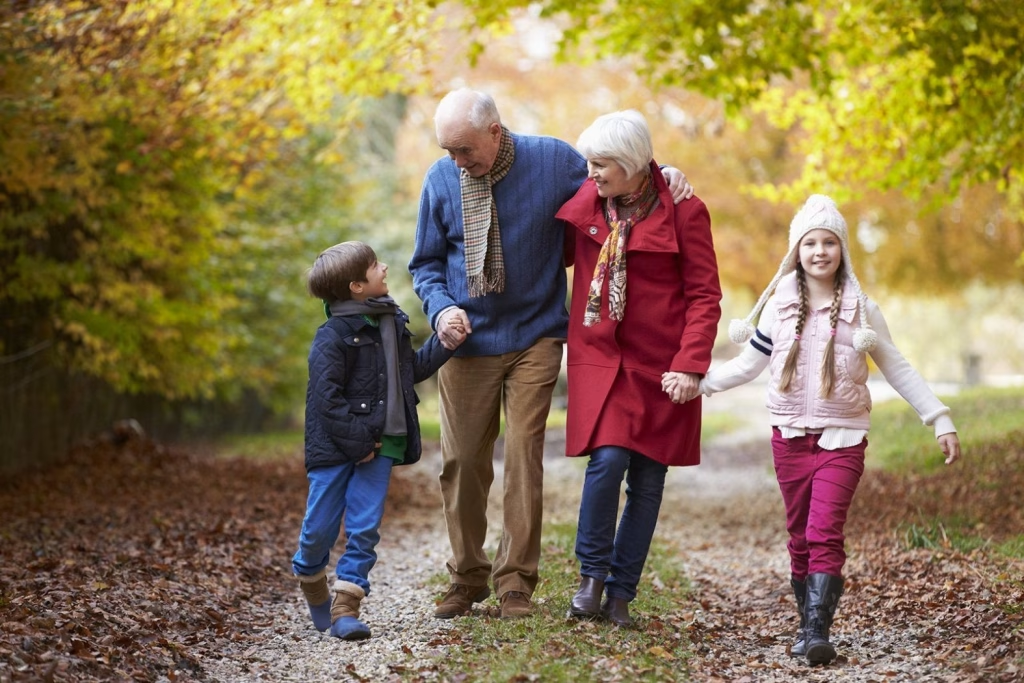
When we think about what we inherit from our mothers, we often think about visible things—our smile, eye colour, hair texture, or even personality traits. But sometimes, we inherit something far less visible and far more important: our health risks.
One of those silent risks is osteoporosis.
Bone Health & Osteoporosis Foundation recently shared a powerful story through their Bone Talk series featuring a mother and daughter, Helen and Michelle, whose journey reminds us why family history matters so much in bone health.
When a Small Fall Reveals a Bigger Problem
Michelle was attending a concert with her mother when she experienced what seemed like a minor fall. At the time, it did not feel serious enough to cause concern. Like many of us, she assumed it was just one of those small accidents we quickly forget.
But the results told a different story.
When her doctor informed her that she had fractured her arm, her immediate reaction was disbelief.
“No, I did not!”
She was just over 50 years old and believed osteoporosis was something that happened much later in life—something for much older women, not for someone still active and healthy.
Yet her diagnosis was not entirely unexpected.
It was already written in her family history.
Her mother, grandmother, and aunts had all been diagnosed with osteoporosis. What seemed like an isolated injury was actually an important warning sign.
Osteoporosis: The Silent Disease
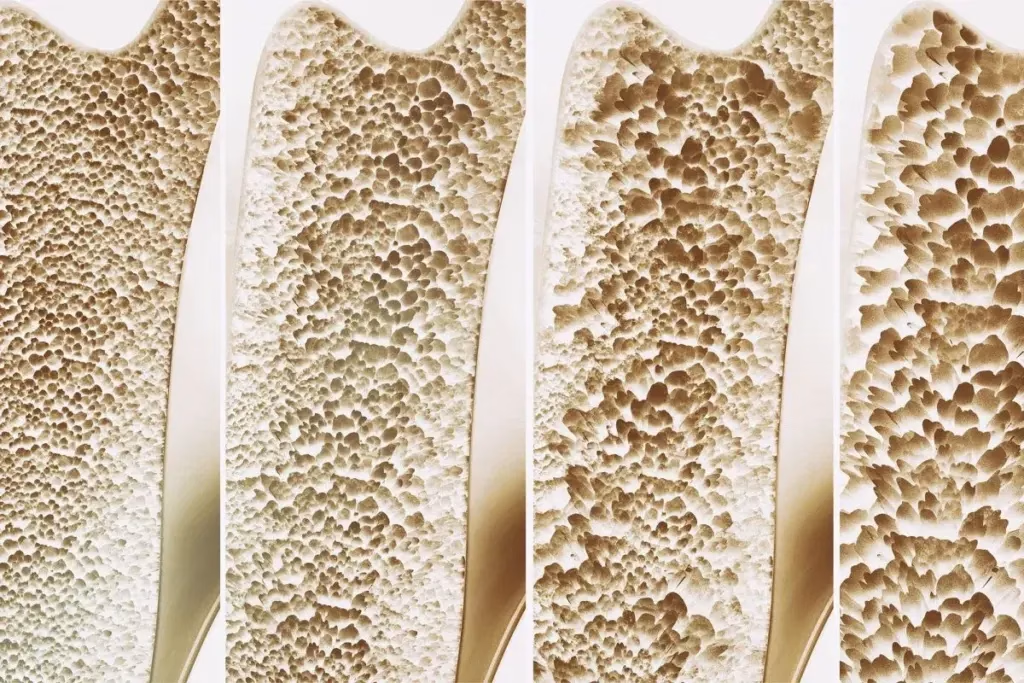
Osteoporosis is often called the “silent disease” because bone loss happens gradually and without obvious symptoms.
Unlike many other health conditions, osteoporosis does not usually cause pain or visible warning signs in its early stages. People often feel completely normal while their bones are becoming weaker.
For many patients, the first sign is a fracture—sometimes from a simple fall, stepping off a curb, or even lifting something light.
This is why early screening is so important.
Why Family History Should Never Be Ignored
If your mother, grandmother, or close relatives have been diagnosed with osteoporosis, your own risk may be significantly higher.
Genetics play a major role in:
- Bone density levels
- Bone structure and strength
- Risk of fractures
- How early bone loss may begin
Family history should not create fear—it should create awareness.
Knowing your risk allows you to take action before complications happen.
The Role of DXA in Early Detection
A DXA (Dual-energy X-ray Absorptiometry) scan remains the gold standard for measuring bone mineral density and diagnosing osteoporosis.
It is quick, painless, and highly effective in identifying reduced bone strength before fractures occur.
At InsureSPR Health, we believe prevention is better than treatment. Early bone health assessment can help individuals:
- Detect osteoporosis early
- Monitor bone loss over time
- Assess fracture risk
- Begin treatment before serious complications arise
- Improve long-term mobility and independence
Osteoporosis Is Not Only for Older Women
One of the biggest misconceptions is that osteoporosis only affects elderly women.
The truth is:
- Bone loss can begin earlier than expected
- Men can also develop osteoporosis
- Lifestyle, medication use, menopause, chronic illness, and genetics all influence risk
Waiting until symptoms appear often means waiting too long.
This Mother’s Day, Give the Gift of Prevention
Mother’s Day is often about flowers, gifts, and celebration—but it can also be about protection.
Honoring the women in our lives can mean encouraging them to prioritize their bone health.
It can mean asking:
“When was your last bone density test?”
It can mean helping your mother, sister, aunt, or even yourself avoid the shock of an unexpected fracture.
It can mean turning family history into family prevention.
Final Thought
Michelle’s story is a reminder that osteoporosis is not always obvious—but it is often predictable.
Sometimes the warning signs are not in our symptoms, but in our family history.
If osteoporosis runs in your family, do not wait for a fracture to start the conversation.
Talk to your healthcare provider. Ask about a DXA scan. Know your risk.
Because strong bones are not just about aging well—they are about living well.
Source
Adapted from Bone Health & Osteoporosis Foundation and their Bone Talk feature on family history and osteoporosis awareness.